
 中文
中文

Multi-Pass Shell-and-Tube Heat Exchanger
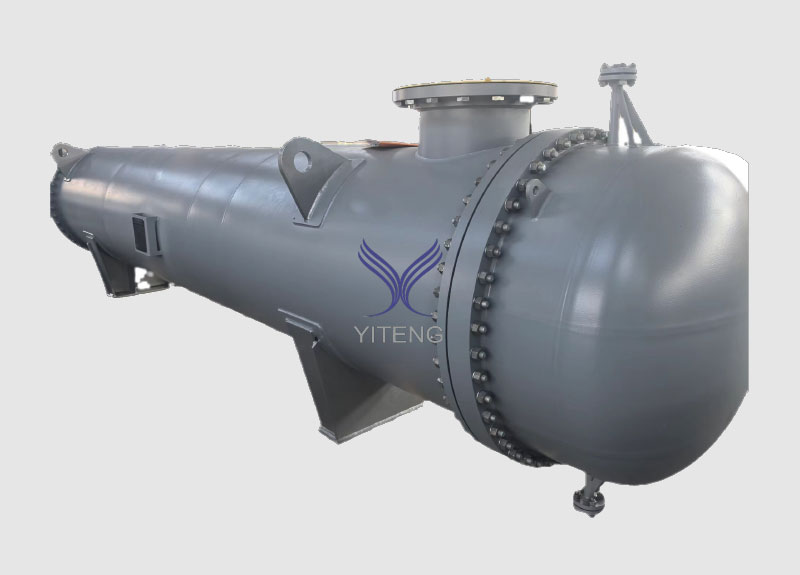
The Multi-Pass Shell-and-Tube Heat Exchanger is a high-efficiency heat exchanger that utilizes multi-pass configurations (2/4/6/8 passes) to optimize temperature difference (ΔT) and enhance heat transfer performance. It is ideal for high-flow, large temperature difference, and complex fluid applications. Below are its core technical parameters:
| Parameter | Typical Value/Range | Remarks |
|---|---|---|
| Design Standard | ASME VIII Div.1 / TEMA BEM/AES / GB 151 | Complies with international standards |
| Heat Transfer Area | 10~2000 m² | Custom sizes available |
| Design Pressure (Shell/Tube Side) | 0.6~15 Mpa (6~150 bar) | High-pressure models up to 30 Mpa |
| Design Temperature | -50°C to +600°C | Supports cryogenic to high-temperature applications |
| Shell Material | Carbon Steel (Q345R) / SS304 / SS316L / Nickel Alloy | Corrosion-resistant options |
| Tube Bundle Material | SS304 / SS316L / 2205 Duplex / Titanium | Anti-fouling design |
| Tube Diameter/Length | Φ10~Φ50 mm / 1~12 m | U-tube/straight tube options |
| Number of Tube Passes | 2/4/6/8 passes | Optimizes temperature difference (ΔT) |
| Baffle Type | Single/Double Segmental / Disk-and-Doughnut | Controls shell-side flow |
| Heat Transfer Coefficient | 500~3000 W/(m²·K) | Depends on pass count and fluid properties |
| Pressure Drop (Tube Side) | ≤100 kPa | Increases with more passes |
| Connection Standard | ANSI / DIN / GB Flanges | DN50~DN1000 |
| Pass Count | Application Scenario | Advantages | Disadvantages |
|---|---|---|---|
| 2-Pass | Small ΔT (<30°C) | Low pressure drop, low cost | Lower efficiency |
| 4-Pass | Medium ΔT (30~80°C) | Balanced efficiency & pressure drop | Slightly complex structure |
| 6/8-Pass | Large ΔT (>80°C) or high-viscosity fluids | Highest efficiency | High pressure drop, requires more pump power |
ABOUT YITENG
PRODUCTS
CONTACT US
Wuxi Yiteng Pressure Vessel Co, Ltd.

Hello, I'm Aurora,a passionate B2B specialist. I'm here to guide you from concept to completion. Let's discuss how we can meet your project's exact requirements. Don't hesitate to reach out!


