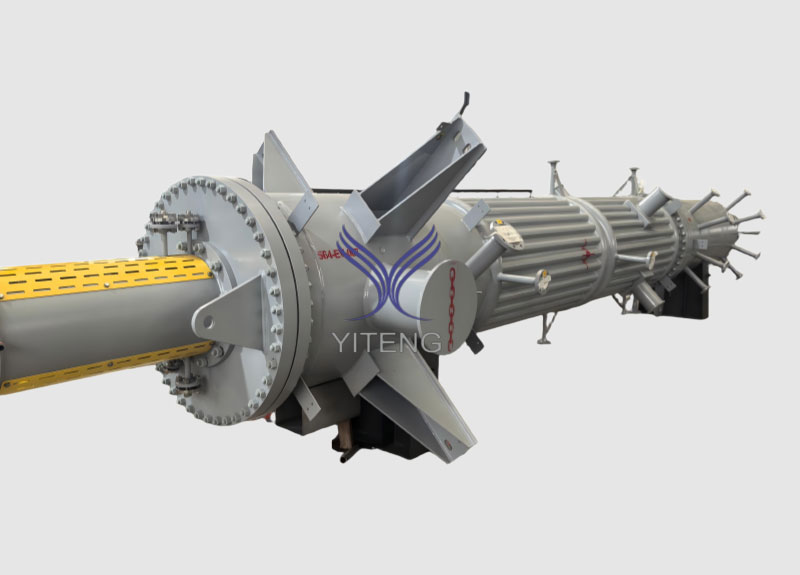
Thin-Film Evaporator Technical Details
I. Equipment Overview
A thin-film evaporator is a high-efficiency evaporation device that uses a rotor to spread liquid into an ultra-thin film (0.1-1.0 mm) on a heated surface for rapid evaporation and separation. Its key features include:
-
High Heat Transfer Efficiency: Thin film enables heat transfer coefficients of 2000-6000 W/(m²·K)
-
Short Residence Time: Material exposure to heat is seconds-long (typically <10 seconds)
-
High Vacuum Compatibility: Stable operation at ≤1 mbar high vacuum
2.Core Structure
-
1.Heating Jacket: Typically heated by steam, thermal oil, or hot water
-
2.Rotor System:
-
o Wiper types: Hinged/fixed/sliding blades
-
o Speed range: 100-800 rpm (frequency-controlled)
-
3.Separator: Internal/external vapor-liquid separation device
-
4.Material Combinations:
-
o Product contact parts: SS316L, Hastelloy, titanium
-
o Heating jacket: Carbon steel (Q345R), SS304
3.Technical Parameters
|
Parameter
|
Typical Range
|
Remarks
|
|
Evaporation Capacity
|
5-5000 kg/h
|
Depends on material properties and ΔT
|
|
Operating Pressure
|
Atmospheric ~ 0.001 mbar
|
High vacuum models require booster pumps
|
|
Operating Temperature
|
50-300°C
|
High-temperature models up to 350°C
|
|
Heat Transfer Area
|
0.1-100 m²
|
Custom designs available
|
|
Wiper Tip Speed
|
2-15 m/s
|
Affects film thickness and heat transfer
|
|
Motor Power
|
1.1-55 kW
|
Correlates with rotor diameter and viscosity
|
|
Viscosity Range
|
1-50,000 cP
|
High viscosity requires special wipers
|
4.Unique Advantages
-
1.Thermal Sensitivity Handling:Short residence time + high vacuum ideal for antibiotics, vitamins, plant extracts
-
2.High Viscosity Processing:
Handles materials up to 50,000 cP (e.g., polymers, resins)
-
3.Self-Cleaning Capability:
Continuous wall scraping prevents fouling and scaling
5.Application Fields
-
Pharmaceutical Industry: Antibiotic concentration, solvent recovery (e.g., methanol, DMF)
-
Food Industry: Juice concentration, flavor extraction
-
Chemical Industry: Polymer devolatilization, monomer purification
-
Environmental Protection: High-concentration wastewater reduction
6.Selection Considerations
-
1.Material Properties: Viscosity, thermal sensitivity, boiling point, solid content
-
2.Process Requirements: Evaporation rate, inlet/outlet concentration, temperature sensitivity
-
3.Material Compatibility: Corrosive/abrasive materials require special alloys
-
4.Energy Optimization: Multi-effect integration or MVR (Mechanical Vapor Recompression) systems
Thin-film evaporators are the preferred choice for high-value material separation. Although initial investment is high, cost recovery is typically achieved within 1-3 years through energy savings and product quality improvements.