
 中文
中文

The Importance of Passivation and Pickling for Stainless Steel Containers
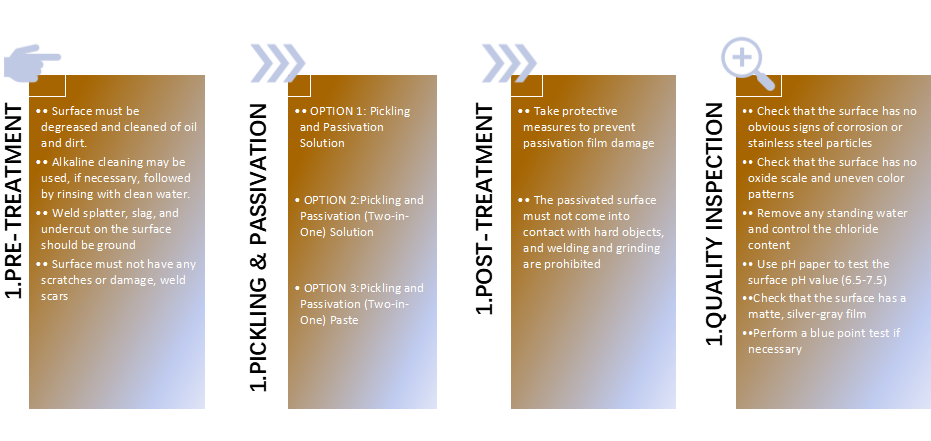
In the realm of stainless-steel container manufacturing, ensuring the longevity and corrosion resistance of products is of paramount importance. One of the key processes that contribute to this goal is the passivation and pickling treatment. This article delves into the science behind this treatment and its significance for our stainless-steel containers.
Understanding Passivation
Passivation is a phenomenon where the corrosion rate of a metal is significantly reduced after it has been treated with an oxidizing medium. This remarkable decrease in corrosion is due to the formation of a thin, dense, and well-adhering film on the metal surface, known as the passivation film.
The Mechanism of Passivation
The passivation process can be explained through the film theory. When a metal interacts with an oxidizing medium, a very thin, dense, and well-covering film is formed on the metal surface. This film, typically a compound of oxygen and metal, acts as a barrier, isolating the metal from corrosive media and preventing direct contact. As a result, the metal is largely protected from corrosion.
For austenitic stainless steel, which is commonly used in our containers, an oxidizing medium can effectively form a passivation film that meets these criteria. However, it is crucial to note that this passivation film can be easily damaged by halide ions such as chloride (Cl⁻), bromide (Br⁻), and fluoride (F⁻), which have an activating effect. This is one of the reasons why, after a hydrostatic test, it is essential to ensure that any water residues are thoroughly dried, and the chloride ion content in the water does not exceed 25 ppm.
The Passivation Process
Austenitic stainless steel is typically passivated using a solution primarily composed of strong oxidizing nitric acid. To ensure the effectiveness of the passivation treatment, the surface to be passivated is first subjected to a pickling process. The entire sequence of these treatments is collectively referred to as pickling and passivation.
Why Pickling is Necessary
Pickling is a preliminary step that removes any surface impurities, scale, or oxide layers that may interfere with the formation of a high-quality passivation film. By cleaning the surface thoroughly, we create an optimal environment for the passivation process to take place.
The Combined Benefits of Pickling and Passivation
The pickling and passivation treatment offers several benefits for our stainless-steel containers:
1.Enhanced Corrosion Resistance: The passivation film significantly reduces the risk of corrosion, making our containers more durable and suitable for various applications, including those involving corrosive substances.
2.Improved Aesthetics: The treatment results in a smooth and clean surface, enhancing the appearance of our products.
3.Regulatory Compliance: By controlling the chloride ion content and ensuring proper passivation, we meet industry standards and regulations, ensuring the safety and reliability of our containers.
Conclusion
At our stainless-steel container manufacturing plant, we take great pride in the quality and durability of our products. The pickling and passivation treatment is a critical process that ensures our containers are protected against corrosion and meet the highest standards of performance and safety. By understanding and implementing these processes effectively, we continue to deliver reliable and long-lasting stainless-steel containers to our customers.
ABOUT YITENG
PRODUCTS
CONTACT US
Wuxi Yiteng Pressure Vessel Co, Ltd.

Hello, I'm Aurora,a passionate B2B specialist. I'm here to guide you from concept to completion. Let's discuss how we can meet your project's exact requirements. Don't hesitate to reach out!


