
 中文
中文

Mastering Metal Joining: A Comprehensive Guide to 7 Key Welding Processes and Their Applications
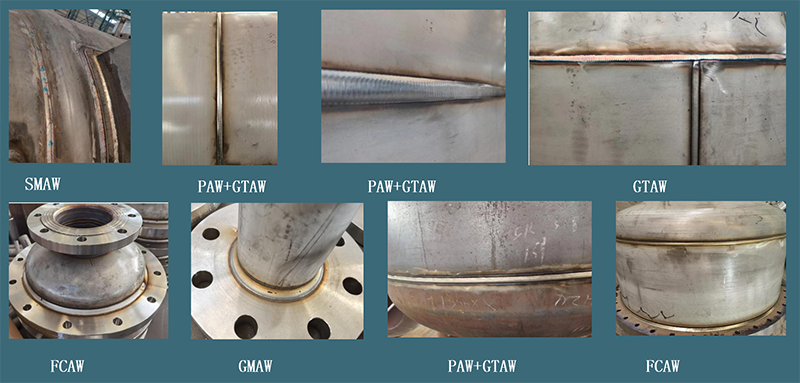
Introduction:
Welding is a cornerstone of modern fabrication, yet selecting the right technique from numerous options can be challenging. This guide provides a detailed breakdown of seven major welding processes, including their working principles, ideal applications, and expert tips, to help manufacturing enterprises optimize production efficiency and product quality.
Main Content:
Welding technology plays a critical role in modern manufacturing. The choice of process directly impacts performance and cost-effectiveness. Below is an in-depth analysis of seven key welding methods:
1. Shielded Metal Arc Welding (SMAW/Stick)
· How It Works: Uses a consumable electrode with a flux coating.
· Applications: Ideal for structural steel (e.g., bridges, buildings), field repairs, and thick materials (4mm and above).
· Advantage: Highly portable; operable outdoors in windy or rainy conditions without shielding gas.
2. Gas Metal Arc Welding (GMAW/MIG)
· How It Works: Employs a continuous wire feed combined with shielding gas.
· Applications: Widely used in automotive manufacturing, sheet metal fabrication, and high-volume production environments.
· Pro Tip: Pulsed MIG is recommended for aluminum welding to reduce heat input.
3. Gas Tungsten Arc Welding (GTAW/TIG)
· How It Works: Utilizes a non-consumable tungsten electrode and filler rod with shielding gas.
· Applications: Suitable for aerospace components, food-grade stainless steel, and precision work (from thin to thick materials).
· Expert Move: A foot pedal allows real-time heat control for enhanced accuracy.
4. Flux-Cored Arc Welding (FCAW)
· How It Works: Features a tubular wire with a flux core (gasless or dual-shield options).
· Applications: Commonly used in shipbuilding, heavy equipment repair, and high-deposition scenarios.
5. Submerged Arc Welding (SAW)
· How It Works: Involves an electrode and a blanket of granular flux.
· Applications: Ideal for pipeline welding, pressure vessel fabrication, and thick plates (20mm and above).
· Advantage: Offers the highest deposition rates among all processes, earning the title "Speed King."
6. Resistance Welding (Spot/Seam)
· How It Works: Relies on pressure and electric current to generate heat for joining.
· Applications: Frequently used in automotive bodies, battery manufacturing, and appliance panels.
7. Specialized Processes
· Electroslag Welding: Applied to vertical joints in thick steel (e.g., skyscrapers).
· Friction Stir Welding: Suitable for aluminum aerospace panels.
· Laser Welding: Ideal for medical devices and electronics requiring high precision.
Key Selection Factors:
· Material type and thickness
· Production volume
· Welding position (flat vs. vertical)
· Quality requirements
Conclusion:
Selecting the appropriate welding process requires a thorough evaluation of specific applications and technical demands. By aligning techniques with project needs, manufacturers can achieve significant gains in efficiency and product reliability. This guide serves as a practical resource for industry professionals, promoting the effective application of welding technologies.
Note: This content is for reference only. For specific technical requirements, please consult professional welding standards or experts.
ABOUT YITENG
PRODUCTS
CONTACT US
Wuxi Yiteng Pressure Vessel Co, Ltd.

Hello, I'm Aurora,a passionate B2B specialist. I'm here to guide you from concept to completion. Let's discuss how we can meet your project's exact requirements. Don't hesitate to reach out!


